
What is a Dopamine Menu?
Many people describe moments when they feel stuck. They want to start a task but cannot find the energy. They want to reset their mood but are unsure where to begin. They feel overwhelmed, unmotivated, or caught in patterns that do not support their wellbeing.
A dopamine menu is a simple tool that helps create ease in those moments. It is a list of activities that offer small boosts of pleasure, motivation, or grounding when your brain needs a shift. The idea has roots in neurodivergent communities and is now used by students, professionals, parents, and anyone who notices fluctuations in energy, focus, or mood.
Instead of relying on willpower in difficult moments, a dopamine menu gives you a ready-made set of options. It reduces decision fatigue while offering a structured way to choose healthy, supportive forms of stimulation.
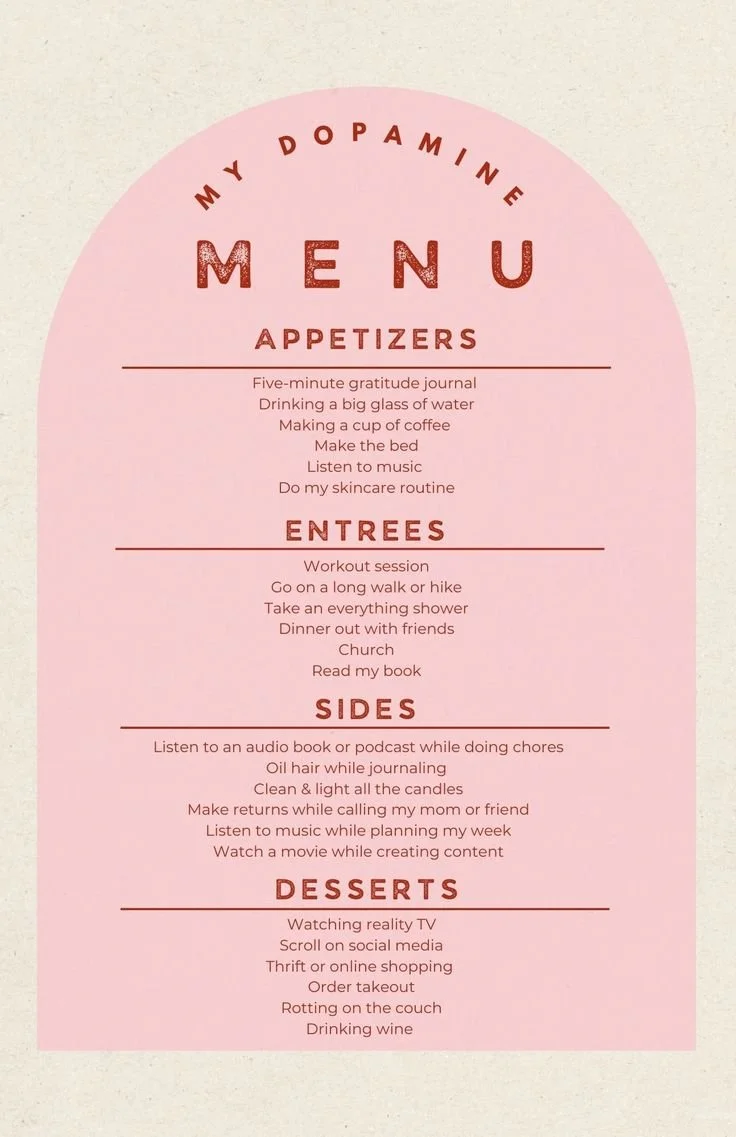
An example of a dopamine menu
Why a Dopamine Menu Helps
It creates space between impulse and action.
When you feel overwhelmed or stuck, the brain often gravitates toward quick fixes. A dopamine menu interrupts that cycle by giving you alternatives that still feel rewarding but are more aligned with your long term wellbeing.
It supports motivation.
Small enjoyable activities can help your nervous system shift into a state where tasks feel more manageable. This reflects core principles of behavioural activation and nervous system regulation.
It reduces decision fatigue.
Choosing the “right” thing in a low energy moment is difficult. A menu removes that pressure by doing the planning ahead of time.
It is personal, flexible, and shame-free.
A dopamine menu is not meant to be perfect or prescriptive. It is a tool you shape around your personality, energy levels, values, and lifestyle. The goal is gentleness, not productivity for productivity’s sake.
The Structure of a Dopamine Menu
Many people find it helpful to use categories similar to those used in a restaurant. You can adjust language and layout to match your preferences. Below are examples your clients can use as a starting point.
Appetizers
Short activities that take less than 5 to 15 minutes. These offer a quick reset when time, energy, or focus is low.
Examples:
• stretching or a single yoga pose
• five minute tidy
• refreshing drink or cold water
• gratitude note or quick journal entry
• brushing a pet
• stepping outside for fresh air
• one song dance break
• a short grounding exercise or breathing pattern
Sides
Small additions that make a task more enjoyable. These can be paired with chores, work, homework, or routines.
Examples:
• music or background sounds
• a podcast while cleaning
• lighting a candle
• wearing comfortable clothes
• a skincare step
• sitting near natural light
• a favourite drink while planning your day
Entrées or Main Course
Longer, more fulfilling activities that create a deeper sense of accomplishment or nourishment.
Examples:
• a walk in nature
• a workout or yoga class
• reading
• organizing a small space
• gardening
• cooking a meal
• creative projects like drawing or making a playlist
• connecting with a friend or family member
• exploring new music
Desserts
Activities that feel rewarding but may be best used in moderation. These are not “bad” or shameful. They simply tend to offer short term dopamine and can crowd out other forms of restoration if they become the default.
Examples:
• scrolling social media
• reality TV
• online shopping
• takeout
• video games
• comfort shows
• couch time
Specials
Bigger experiences that take more planning, money, or energy. These can be meaningful milestones or intentional self-care moments.
Examples:
• weekend trip
• spa treatment
• concert
• date night
• creative class or workshop
• scheduling a guilt free half day off
• planning a seasonal outing
How to Use Your Dopamine Menu
A dopamine menu works best when it is visible and easy to access. Many people keep it on a fridge, in a planner, saved on their phone homepage, or posted near their workspace.
Use it when you notice any of the following:
• you feel stuck or overwhelmed
• you want a break but want to choose intentionally
• your motivation has dropped
• you are tempted to reach for quick dopamine habits by default
• you feel restless, scattered, or disconnected
Rather than forcing yourself to push through, choose one item from your menu. The goal is not to avoid tasks. It is to support your brain so that returning to the task feels more possible.
Creating Your Own Menu
You can build a dopamine menu in four simple steps.
Reflect on what truly restores you. Think in terms of sensory comfort, movement, connection, creativity, and pleasure.
Sort your ideas into categories such as appetizers, sides, entrées, desserts, and specials.
Keep the list short, realistic, and personal. You can update it anytime.
Place it somewhere accessible and treat it as a kindness, not a task list.
Clients often benefit from experimenting for a week or two and noticing which activities genuinely shift their mood, focus, or energy.
A Tool for Self-Compassion
A dopamine menu is not about fixing yourself. It is about understanding how your brain works and creating supports that honour your needs. It can be especially helpful for people who struggle with burnout, depression, anxiety, low motivation, or executive function challenges.
Above all, it is a reminder that small, nourishing moments matter. You do not need to earn rest or pleasure. You can build them gently into your day, one choice at a time.
About Moha
Hi, I’m Moha. I am a trauma-informed therapist who specializes in working with eating disorders, perinatal health, and sexual wellness.
Before I was a therapist, I volunteered at the Looking Glass Foundation for Eating Disorders. I also worked in women’s health research exploring sexual pain, shame, and desire, and supporting new parents navigating postpartum mental health challenges. Here, I directly connected with individuals of all ages, backgrounds, and sexual orientations, and learned that while our journeys may look different, our core struggles remain the need. We all want to feel seen, supported, and secure. Whether you’re wanting to make peace with food, finally achieving more pleasurable intimacy, navigating your new life as a parent, or learning to accept yourself as you are, I promise to take this path together with you.
I also acknowledge that we live in a world that systematically makes it more difficult for women and folks of other marginalized genders to avoid burnout and overwhelm. Intersecting identities and systems of oppression can make it even more challenging. This is why the bulk of my practice focuses on the experiences of women and non-binary folks. I aim to be a safe space where you can rest your armour and let yourself be vulnerable, knowing that you are seen and valued. Together, we will equip you with tools to take care of yourself, and continue to live your life to the fullest.
I offer a free 15-minute consultation to answer any questions about my process and to see if we might be a good fit!
