
Understanding Avoidant/Restrictive Food Intake Disorder (ARFIDs)
Eating is often described as something natural or intuitive. For many people, it is anything but simple.
If you or someone you love struggles with a very limited range of foods, avoids eating altogether, or feels anxious around meals for reasons that do not involve weight or body image, you may be looking at something called ARFID.
Avoidant Restrictive Food Intake Disorder, or ARFID, is a relatively newer eating disorder diagnosis. It is still widely misunderstood, which can leave many people feeling confused or overlooked.
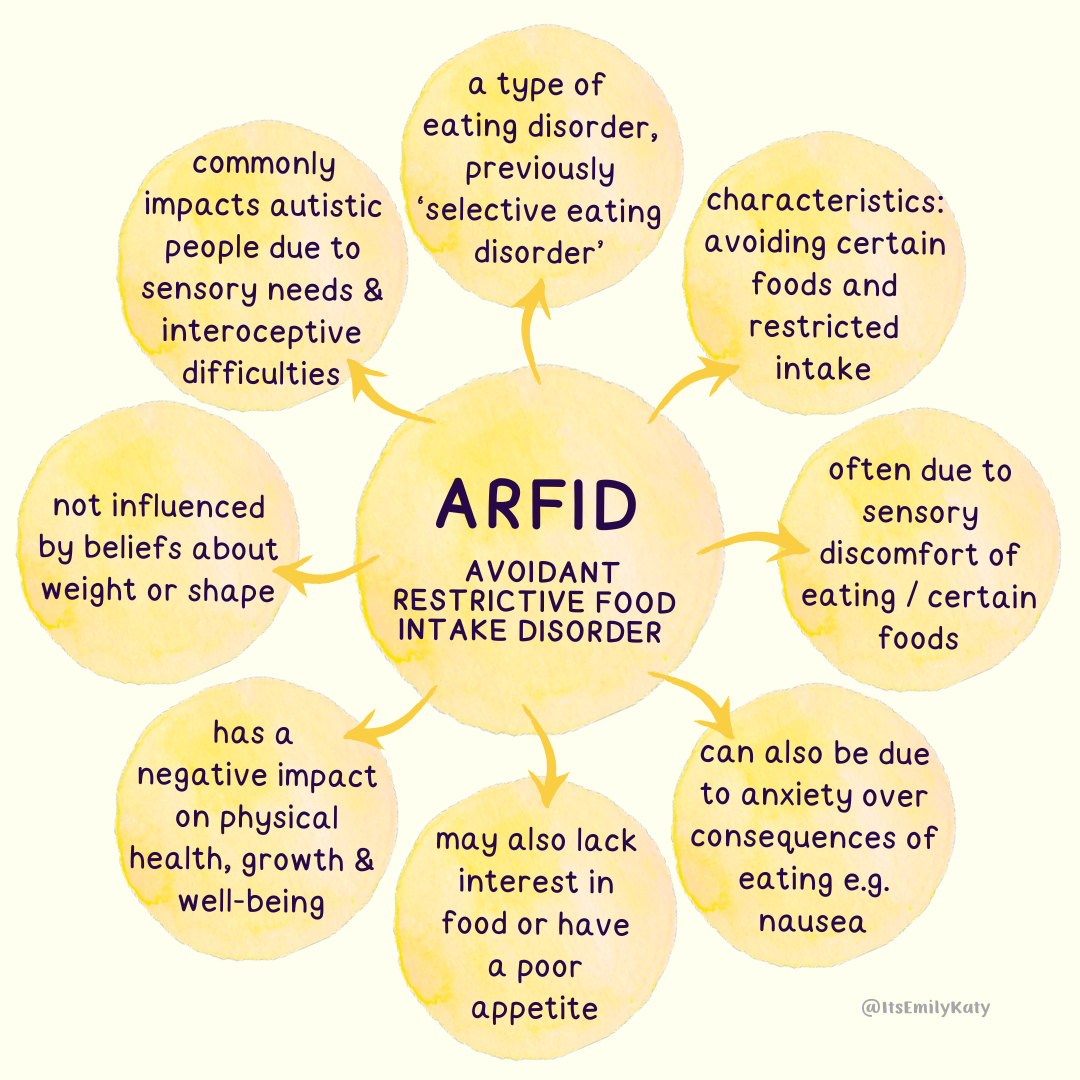
What ARFID actually is
ARFID involves avoiding or restricting food in a way that makes it difficult to meet your body’s nutritional needs. This is not driven by a desire to change body shape or weight.
Instead, the reasons tend to fall into a few common patterns:
A lack of interest in eating or low appetite
Strong sensitivity to textures, smells, or tastes
Fear of negative experiences like choking, vomiting, or allergic reactions
For someone with ARFID, eating can feel stressful, overwhelming, or even unsafe. This goes far beyond what we typically think of as picky eating.
More common than people realize
ARFID is often thought of as rare, but research suggests otherwise.
Estimates show it may affect anywhere from 0.3 percent to 15.5 percent of the general population. That wide range reflects how under recognized it still is.
In clinical settings, the numbers are even higher. Some specialized eating disorder programs report that more than half of their patients meet criteria for ARFID.
Even in adult populations, ARFID is present. One study found that about 9.2 percent of adults receiving treatment for eating disorders were diagnosed with ARFID.
This is not just a childhood condition. Many adults have lived with these patterns for years, often without a name for what they are experiencing.
It is not “just picky eating”
One of the biggest misconceptions about ARFID is that it is simply extreme pickiness.
While both can involve a limited range of foods, ARFID is more persistent and more impactful. It can lead to nutritional deficiencies, difficulty maintaining weight, low energy, and challenges with concentration and mood.
It can also affect daily life in quieter ways. Social situations that involve food may feel stressful. Eating in front of others can bring anxiety. Planning meals can feel overwhelming.
These experiences are real and valid.
ARFID can look different for everyone
There is no single way ARFID presents.
Some people have a very small list of “safe” foods and feel unable to eat anything outside of that list. Others may skip meals without noticing due to low appetite. Some experience intense fear tied to eating after a difficult or traumatic event.
It is also common for ARFID to exist alongside other conditions such as anxiety, ADHD, autism, or OCD.
This can shape how symptoms show up and what kind of support feels most helpful.
The impact goes beyond food
When the body does not get enough variety or quantity of nutrients, it can affect both physical and emotional well being.
People with ARFID may experience fatigue, irritability, difficulty focusing, and increased anxiety. Over time, nutritional gaps can impact overall health and development.
There can also be a deep emotional toll. Many people describe feeling misunderstood or judged, especially when others assume they are just being difficult.
Support and treatment
ARFID is treatable, and support can make a meaningful difference.
Treatment often involves a combination of approaches that gently expand food variety while addressing the underlying fears or sensitivities connected to eating. This might include therapy, nutrition support, and, in some cases, medical care.
For many, the goal is not to force change quickly, but to build safety and trust around food over time.
Small steps matter here.
A more compassionate understanding
If you are navigating ARFID, or trying to support someone who is, it helps to start from a place of understanding.
This is not about willpower or being difficult. It is about a nervous system that is responding strongly to food in ways that feel very real.
With patience, support, and the right care, it is possible to create a relationship with food that feels more manageable and less distressing. And that process deserves gentleness every step of the way.
About Moha and Eating Disorder Counselling
Hi, I’m Moha. I am a trauma-informed therapist who specializes in working with eating disorders and body image. We live in a world that is saturated with messages about what our bodies are supposed to look like. We are told that if we look a certain way, we can finally be “enough”. As someone with lived experience of an eating disorder, I know all too well that it is never just about food; rather it is about wanting to feel loved and safe, wanting to control something in an otherwise chaotic world, or wanting to finally feel like you are enough.
Before I was a therapist, I volunteered at the Looking Glass Foundation for Eating Disorders. Here, I directly connected with individuals of all ages, backgrounds, and sexual orientations, and learned that while our journeys may look different, our core struggles remain the need. We all want to feel seen and secure. Whether you’re wanting to make peace with food, finally giving up on dieting, or learning to accept yourself as you are, I promise to take this path together with you. From someone who has been there, recovery is possible.
I also acknowledge that we live in a fatphobic world. Intersecting identities and systems of oppression can make it even more challenging to focus on recovery for folks of colour who are in larger bodies. Together, we will equip you with tools to take care of yourself, and continue to live your life to the fullest. I operate from a Health-At-Every-Size, fat-positive, and body-neutral lens.
I offer a free 15-minute consultation to answer any questions about my process and to see if we might be a good fit!
